
Pina Earth projects under the forest climate standard: ICROA Conditional Endorsement as a sign of quality
Key takeaways from this article
- The eva foundation, the organization responsible for the Forest Climate Standard (FCS), has received an ICROA Conditional Endorsement.
- The WKS thus meets key international quality criteria set out in the International Carbon Reduction and Offset Alliance Code of Best Practice.
- "Conditional" means: The basic requirements are met, further defined development steps will follow.
- A clear reference framework for transparency, additionality, and external auditing is created for companies.
- With the Conditional Endorsement, Pina Earth's climate protection projects developed in accordance with the Forest Climate Standard receive another seal of quality.
Why are quality seals such as ICROA necessary?
The voluntary carbon market no longer enjoys a presumption of trust. Companies are increasingly under scrutiny: supervisory boards, the public, and the media are questioning the quality of individual projects. Sustainability managers must explain why they choose a particular project. In discussions, we hear the same question over and over again: "How can we tell that a project is high-quality and trustworthy?"
This is precisely where independent testing bodies come in. The International Carbon Reduction and Offset Alliance (ICROA) tests standards in the voluntary carbon market according to strict criteria. The seal of quality confirms that a standard is considered trustworthy and complies with recognized quality assurance and best practice frameworks. Projects developed under this standard thus meet established integrity and quality criteria. For example, the ICROA endorsement confirms that allCO2 certificates are listed in a public registry and are validated and verified by independent bodies.
Standards set the rules for developing, verifying, and certifying climate protection projects in the voluntary carbon market. In doing so, they ensure comparability and credibility. Specifically, a standard has the following core functions:
- Methodological basis: The standard specifies requirements for baseline scenarios, additionality, permanence, leakage, and monitoring.
- Quality assurance: Accredited third parties are commissioned to independently validate and verify the projects.
- Transparency and traceability: All projects and carbon credits listed in a public registry. All retirements are documented and made visible there, so that double counting is avoided.
- Risk management: A risk buffer for projects protects projects from environmental risks, providing buyers with additional protection against certificate failure.
- Market confidence and comparability: Standards form an institutional authority of trust between project developers, buyers, and other stakeholders. Companies can thus acquire certificates that demonstrably meet certain quality criteria and are verifiable.
ICROA assesses a standard based on criteria such as its independence, transparent governance structures, independent validation and verification by qualified auditing bodies, and proof of the additionality and permanence of emission reductions. This allows projects to be classified in a measurable way.
In addition to ICROA, there are other quality frameworks that assess and certify the quality of a standard. The ICVCM, for example, awards the Core Carbon Principles (CCP) label to compliant programs and methodologies.
In addition, corporate standards such as the VCMI (Voluntary Carbon Markets Integrity Initiative) and SBTi (Science Based Targets Initiative) establish rules on how companies may use and communicateCO2 certificates. There are also project rating agencies that evaluate individual projects. We would be pleased to provide more information on the individual quality frameworks in a joint discussion.
What exactly does the ICROA Conditional Endorsement mean?
The conditional endorsement of the eva foundation behind the Forest Climate Standard confirms that recognized quality requirements are met. This reduces a key risk for companies: damage to their reputation due to inadequately verified climate protection projects. Pina Earth's climate protection projects, which are developed under the Forest Climate Standard, thus carry an additional, independent seal of quality.
A conditional endorsement confirms, among other things, that
- Projects must be validated by FSC, PEFC, or ISO 14065-accredited verification bodies, they must demonstrate legal and financial additionality, and a 15% permanence buffer protects against forest damage caused by extreme weather events (source:Application Report).
- Requirements for governance, stakeholder participation, and the avoidance of conflicts of interest must be met. For example, a standard may not be actively involved in the trading of CO2 certificates.
- Rules, methods, and the carbon credits are transparent, traceable, and publicly accessible.
Details can be found in the ICROA Endorsement Review Criteria document.
Full endorsement will be granted once at least 10 projects have been registered and 100,000 verified CO₂ certificates have been issued. This demonstrates that the standard has the necessary market presence to operate on a scalable basis in the market.
For the eva foundation, this means that methodology, governance, and processes have been independently verified. Companies that purchase CO₂ certificates from projects under the Forest Climate Standard, such as those from Pina Earth (link to portfolio), are thus provided with assurance.
This is not a marketing label, but a certified quality assurance. For the Forest Climate Standard, this means that the methodology, governance, and structure have been independently verified. Companies that purchase CO₂ certificates from projects under this standard, such as those from Pina Earth, can be assured that they are not investing in an isolated regional approach, but in a project within an internationally verified quality framework.
European climate protection projects in forests can thus be classified in a measurable way.
What makes forest conversion projects under the WKS special?
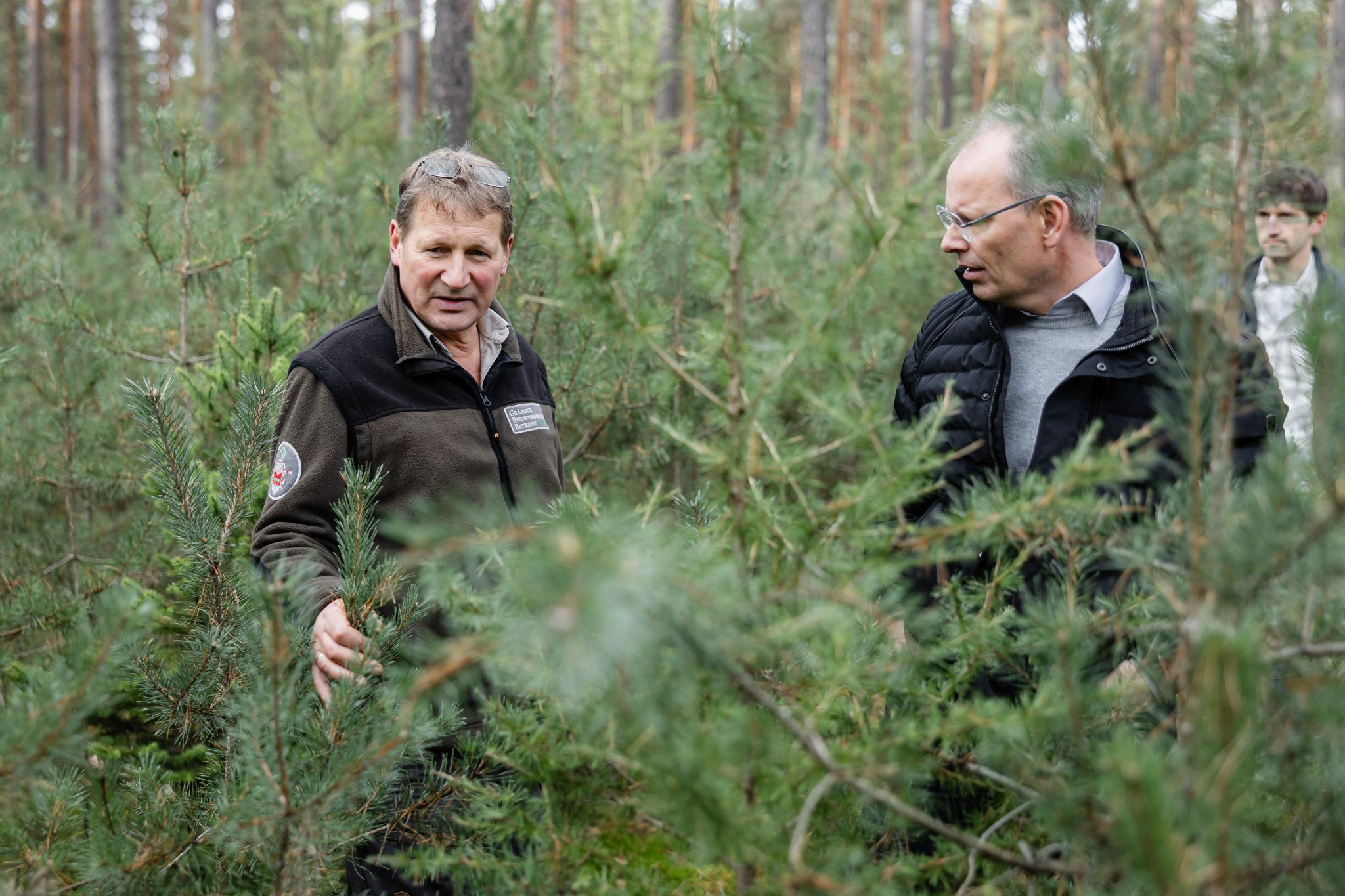
Pina Earth has developed the world's first forest conversion method under the Forest Climate Standard. This method has been accredited and adapted to the requirements of regional ecosystems in Europe: three million hectares of forest need to be converted in Germany alone. Projects certified under the forest conversion method aim to protect existing forest stands and prepare them for climate change. Commercial forests are thus being converted into structurally diverse mixed forests.
How does it work?
- Selection of suitable project areas: The first step is to select project areas that urgently need to be converted. These are typically monoculture areas dominated by a single tree species.
- Defining measures: Together with the forest owners, measures are defined that are appropriate for the forest and location of the project area. A mixture of planting, sowing, and natural regeneration is used to introduce tree species that are suitable for the location. At the same time, the forest owner draws up a plan for the maintenance and protection of the forest areas.
- The goal is to create a forest that is mixed horizontally (different tree species) and vertically (different age structures) and adapted to climate change. Stands are structured in such a way that they are better able to withstand drought, storms, and pest pressure.
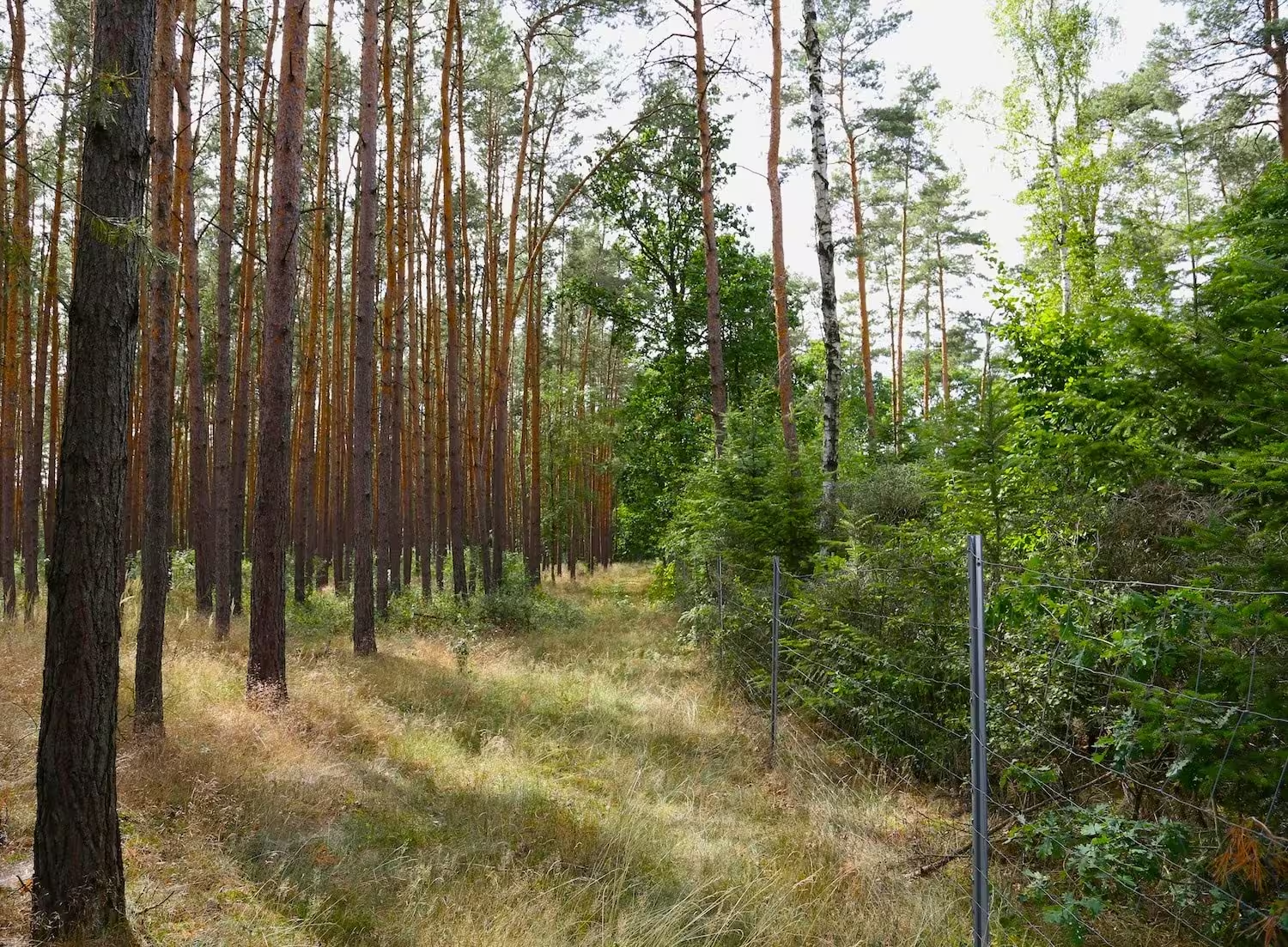
This does not happen within a year, but is a process that takes decades. Especially at the beginning, major investments are necessary to lay the foundation.
Those who invest in such climate protection projects in forests are therefore not financing short-term measures, but structural change.
"For companies that invest in certified climate protection projects as part of their climate strategy, one thing is particularly important: tangible projects based on a robust, transparent, and scientific methodology. Our two successfully completed public consultations and the external expert review as part of the accreditation process under the Forest Climate Standard have confirmed this. We are very pleased that the standard itself is now also receiving an external seal of quality from ICROA. This will enable us to support companies and create the necessary transparency for the market."
— Leoš Paul Bloch, Head of Sales at Pina Earth
How can you support forest conversion in Germany?
Pina Earth is developing several forest conversion projects under the Forest Climate Standard. An excerpt can be found on this map:
If you want to integrate European climate protection projects in forests into your climate strategy, there are three questions to consider:
- Which projects are currently available?
- What volumes can realistically be planned?
- How are methodology, monitoring, and reporting structured?
We discuss these points transparently in direct communication.
Schedule a meeting and check with us to see if our projects fit your climate strategy.
Frequently Asked Questions
What is ICROA?
The International Carbon Reduction and Offset Alliance is an association of market participants in the voluntary carbon market. The organization defines quality criteria for standards and verifies compliance with them.
Is the Forest Climate Standard certified directly by ICROA?
ICROA does not certify individual projects. Instead, it assesses standards and their supporting organizations. In the case of the Forest Climate Standard, this applies to the eva foundation.
What does "conditional endorsement" mean?
"Conditional" means that the standard meets the ICROA endorsement criteria and is about to transition to full endorsement. This transition will take place once at least 10 projects have been registered and 100,000CO2 certificates have been issued.
Where can I view Pina Earth projects?
All projects are publicly documented. You can find information about areas, measures, and monitoring on our project pages. You can track progress transparently via the forest dashboard.
Sources
ICROA Endorsement Review Criteria
World Bank: State and Trends of Carbon Pricing
Integrate European climate protection projects into your strategy?
We are happy to discuss which projects are available, what volumes are realistic, and how methodology, monitoring, and reporting are structured.
Book an expert callAbout the author

Dr. Christine Rzepka has been Chief of Staff at Pina Earth since 2023 and is responsible for the marketing and communication of climate protection projects, among other things. In her articles, she shares recommendations and practical insights on credible sustainability communication and provides insights into Pina Earth's technology-based approach to regional climate protection. Before joining Pina Earth, she worked in other start-ups in the FinTech and EdTech space, in technology consulting and in academia as part of her PhD in Information Systems.