
Regional CO₂ certificates: Why the Plansee Group supports climate protection projects in Tyrol
Key takeaways from this article
Climate protection becomes regional and concrete: The Plansee Group supports forest projects less than 20 minutes by car from its headquarters – where the company operates economically and where responsibility becomes visible.
Supplement rather than substitute: Regional carbon credits the gap for unavoidable Scope 1 and 2 emissions, while the decarbonization strategy continues to be implemented consistently.
Quality through standards: All projects comply with ISO 14064-2 and are validated by TÜV AUSTRIA – for traceable, additional, and long-term CO2 sequestration.
Not all emissions can be avoided in the short term—even if a company consistently reduces them. The Plansee Group, with its two business areas Plansee HPM und CERATIZIT, is therefore supplementing its sustainability strategy with regional climate protection contributions: It supports three climate protection projects in Tyrol. These forest areas are less than a 20-minute drive from the Plansee Group's headquarters.
The aim is to take responsibility for unavoidable emissions and strengthen regional forests as key ecosystems. This is because the economy and society are directly and indirectly dependent on their health and climate resilience.
Why does the Plansee Group deliberately focus on regional projects? There are three key reasons.
Reason 1: Climate protection where responsibility becomes visible
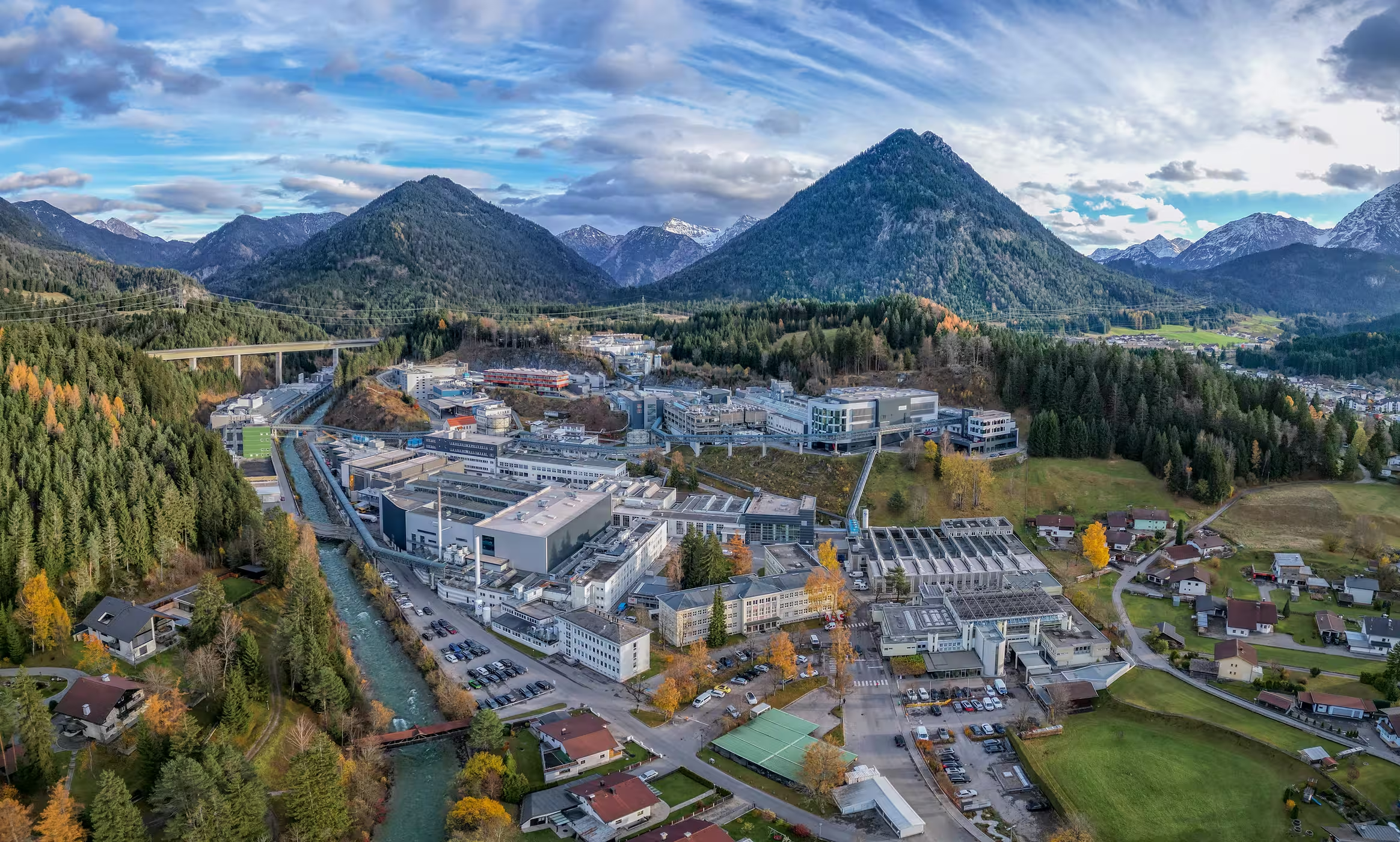
The supported forest areas are located in the immediate vicinity of the group's largest production site and headquarters. The Plansee Group is thus anchoring climate protection in the areas where the company operates economically and bears responsibility. Two other projects supported by the company are also located near larger sites in the USA and India.
Instead of investing in anonymous projects, the Plansee Group is involved in forests that employees, partners, and local residents are familiar with. The condition of these areas is not abstract, but tangible. Regional climate protection thus becomes concrete, comprehensible, and verifiable. The geographical proximity of the projects also makes this responsibility visible in geographical terms.
Reason 2: A realistic approach to emissions
The Plansee Group pursues a clear decarbonization strategy. In recent years, it has made significant progress in reducing greenhouse gas emissions through numerous measures, including the use of electricity from renewable sources at almost all production sites and high recycling rates.
At the same time, it remains clear that not all emissions can be avoided in the short term. For these unavoidable emissions in Scopes 1 and 2, the Plansee Group relies on voluntary climate protection contributions through regionalCO₂ certificates. These are not a substitute for decarbonization, but rather a complementary component of the climate strategy. The forest projects bindCO₂ in the long term and close the gap where reduction currently reaches physical or technical limits.
Reason 3: Long-term impact through quality
In climate protection projects, forestry operations focus on sustainable forest management with a long-term perspective. The aim is to make forests climate-fit, permanently sequester carbon, promote biodiversity, and increase resilience to the effects of climate change.
All proceeds from the projects are reinvested in the care and maintenance of the forests. This creates long-term prospects for forest owners and stable forest areas for decades to come.
The quality of the projects is crucial for the Plansee Group. The projects meet the requirements of the international standard ISO 14064-2 and are validated by TÜV AUSTRIA. On this basis, carbon credits are created that document the actual and additional CO₂ sequestration of the forest projects—traceable, verifiable, and effective in the long term. Quality and transparency are thus an integral part of the approach, not downstream control.
What the Plansee Group says about the project
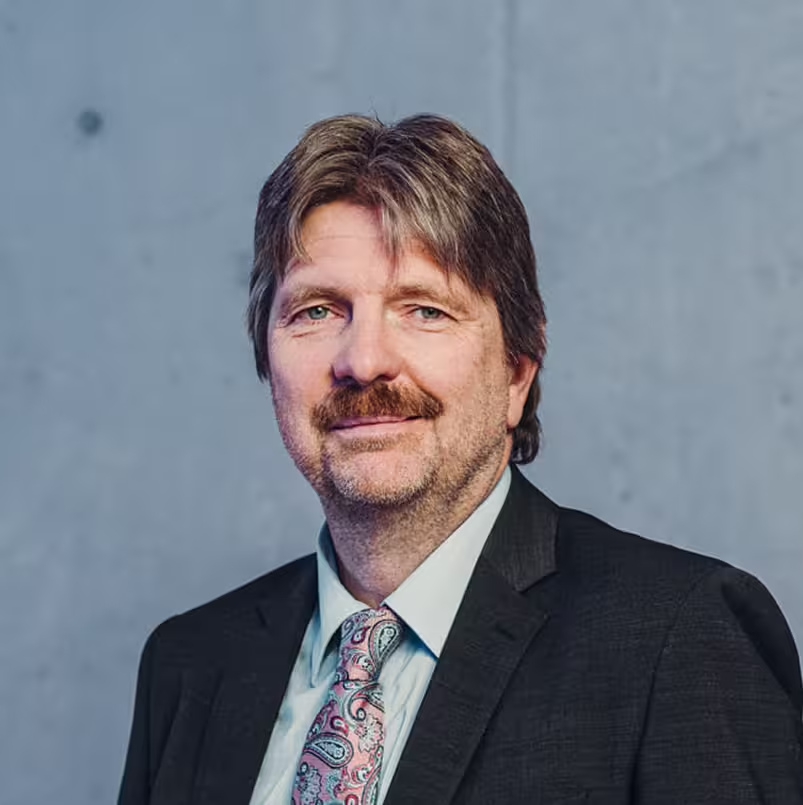
"We are delighted to now also be supporting projects in the immediate vicinity of our headquarters," says Dr. Andreas Lackner from the Plansee Executive Board. "The regional anchoring of the projects is of central importance to us."
That's exactly the point: the combination of regional proximity and high quality standards makes all the difference.
Are you also interested in regional climate protection projects?
We are happy to discuss how climate contributions can be meaningfully and credibly integrated into existing climate strategies.
Talking about regional climate protection projectsAbout the author
Tobias Sutterlüty is Head of Design at Pina Earth, where he is responsible for communication, branding, and product design. He brings several years of experience from working at an international digital agency in Vienna with global clients and completed his education at Hyper Island. At Pina Earth, he combines strategic design with sound climate communication to make carbon credits and accessible.